What is tension in sound design?
Tension in sound design is not a single sound or effect. It is a controlled emotional state built over time. It relies on anticipation, contrast, and subtle variations to guide how an audience feels and reacts.
In film and trailers, tension often works below the surface. A low, evolving ambience or a sustained drone can create unease even when nothing is happening visually. For example, in Arrival, tension is built through slowly evolving, low-frequency drones, voice-like textures, and unstable tonal layers that subtly shift in pitch. These elements create a sense of unease without relying on obvious musical cues, reinforcing the film’s ambiguity.
This highlights a key principle: tension is not driven by loudness alone. Even very quiet or minimal sounds can create strong tension when combined with timing, contrast, and expectation. Instead, it emerges from how sounds are arranged and perceived over time.
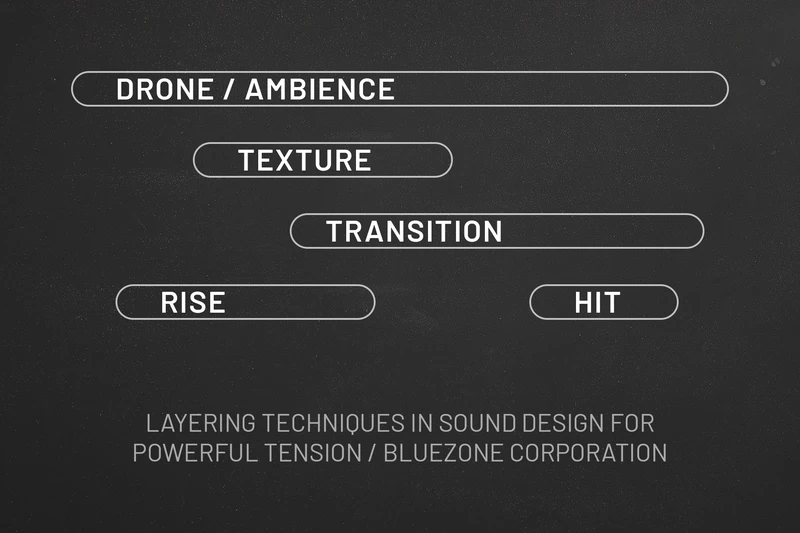
In professional workflows, sound designers rarely lean on isolated sounds. Instead, they build tension using layers of ambiences, textures, and sound effects. A sound effects library provides raw material, but tension emerges from how these elements are selected, combined, and shaped over time.
Why tension matters in sound design
Tension is essential because it directly influences attention and emotional engagement. In film and trailer sound design, tension structures the narrative. A gradual build-up followed by a sudden impact can transform a simple visual into a powerful moment. Trailers rely on this approach, using risers, impacts, and transitions to guide the viewer through a sequence of rising intensity.
The sound design fundamentals behind tension
Dynamic range and contrast
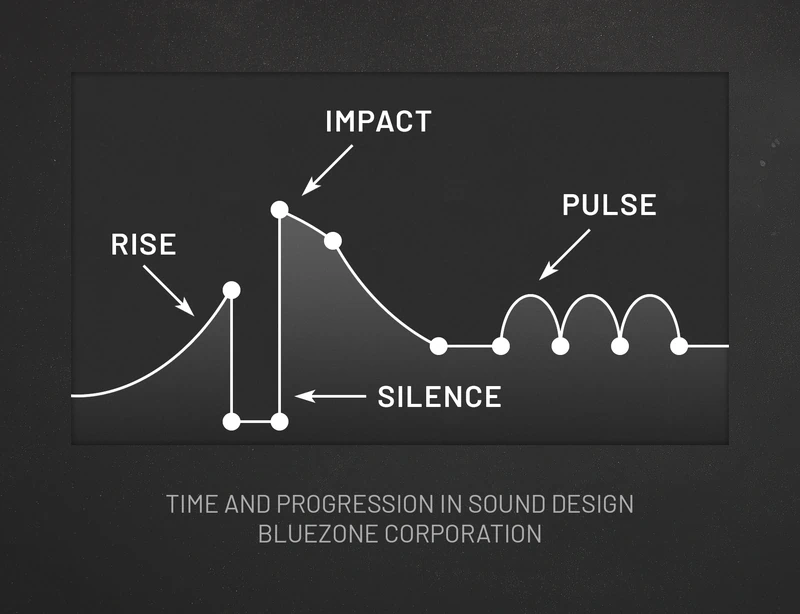
Tension often comes from contrast. The shift between silence and sound or between sparse and dense layers naturally creates anticipation. In many trailers, a near-silent moment followed by a strong impact immediately captures attention and enhances emotional impact.
Frequency perception: low vs high tension
Low-frequency sounds convey weight, pressure, and threat. In Sicario, tension is reinforced by sustained low-frequency rumbles and sub-heavy pulses that gradually intensify. These sounds are often felt more than heard, creating a physical sense of pressure that mirrors the on-screen threat.
High-frequency elements, on the other hand, introduce discomfort or alertness. Sharp or saturated textures can create a feeling of instability. Effective tension usually comes from combining both, rather than relying on a single frequency range.
Transients and impact perception
Transients define key moments in time. A strong impact after a gradual build-up creates a clear emotional reaction. In trailer sound design, hits are often in keeping with visual cuts, reinforcing both rhythm and structure.
Core sound design elements that create tension
Drones: building a constant threat
Drones are sustained sounds that evolve slowly over time. They create a continuous sense of tension and instability. In Annihilation, tension emerges from layered drones that evolve unpredictably, combined with distorted organic textures. The lack of stable tonal grounding creates a constant sense of instability.
Risers: creating anticipation
Risers gradually increase in intensity, pitch, or density. They signal that something is about to happen and are widely used in trailers to build toward key moments.
Impacts and hits: releasing and defining tension
Impacts can release tension after a build-up, but they also define structure. They are used to punctuate transitions, emphasize cuts, and highlight key visual moments such as title cards or logo reveals.
Whooshes and transitions
Whooshes help guide movement and connect scenes. In fast-paced trailers, they maintain continuity between cuts while preserving momentum.
Textures and ambiences
Ambiences create the continuous background of a scene, while textures add detail and variation within that space. In The Revenant, environmental ambiences combined with subtle textural layers reinforce isolation and unpredictability.
Layering techniques in sound design for powerful tension
What is layering in sound design?
Layering is the process of combining multiple sounds to create a richer and more controlled result. It is a core technique in modern sound design.
Combining sub, attack, texture, and tail
A typical layered impact sound often includes low-end energy (sub), a defined transient (attack), mid or high-frequency textures, and a tail to create space. However, this structure mainly applies to cinematic hits and impacts. Other elements such as ambiences or textures may not include sub layers or pronounced tails, and instead rely on gradual evolution and spectral movement.
Avoiding muddy mixes
When too many sounds occupy the same frequency range, clarity is lost. Careful EQ, spacing, and sound selection are essential to maintain a clean and effective mix.
Time and progression in sound design
Build-ups and progression
Tension is primarily a process that is unveiled over time. Gradual increases in intensity, density, or pitch guide the listener toward a climax. In trailers, build-ups often lead into a major impact or reveal, structuring the sequence.
Using silence to increase tension
Silence is a powerful tool. Removing sound before a key moment creates expectation and amplifies the following event.
Pulses and timing-based tension
Repetitive pulses can create a sense of movement and anticipation. In Mad Max: Fury Road, rhythmic engine roars, metallic impacts, and repeating mechanical pulses create a relentless sonic momentum, maintaining constant tension throughout action sequences.
Spatial sound design and immersion
Stereo width and perception
Wide sounds create immersion, while narrow sounds feel closer and more focused. Switching between both can enhance spatial perception and tension.
Reverb and distance
Reverb defines how close or distant a sound feels. Large reverberation can create a sense of scale or isolation, while dry sounds feel immediate and intense.
Using sound libraries in sound design workflows
What sound effects libraries provide
Sound effects libraries provide production-ready sounds such as drones, risers, impacts, and ambiences.
Why libraries don’t create tension alone
A cinematic sound effects library provides raw material, but tension comes from how sound designers combine, process, and arrange these elements over time.
Choosing production-ready sounds
High-quality sounds reduce the need for heavy processing and allow sound designers to focus on timing, layering, and storytelling.
Real-world applications of tension in sound design
Film and Trailer sound design
In films and trailers, tension is used to structure the narrative and guide emotional responses. From subtle ambiences to powerful impacts, sound design highlights visual storytelling and keeps the audience engaged.
Differences between film and trailer tension
Tension evolves differently depending on the format. In films, tension can develop gradually over long periods. It may rise and fall, creating contrast and allowing moments of release before building again.
In trailers, tension is more condensed and structured. It typically follows a rapid progression with clear stages: introduction, build-up, escalation, reveal, and final impact. This results in a more compressed and intensified use of risers, impacts, and transitions compared to film sound design.
Unlike film and trailers, video game sound design often relies on interactive and adaptive systems, where tension evolves dynamically based on player actions.
Want to see more of our content in Google? Add us to your Preferred Sources.